Best Horse Racing Betting Sites UK: Expert Picks for 2026
By Racing Betting Analyst · 11 years specialising in UK and Irish horse racing markets
 Available in US
I remember standing at Cheltenham in March, watching punters frantically check three different apps trying to find the best odds on a 5/1 shot in the Arkle. One of them turned to me and asked, “Does it really matter which site I use?” That question stuck with me — because yes, it matters enormously, and finding the best horse racing betting sites UK has to offer can be the difference between a profitable season and a frustrating one.
After eleven years specialising in UK and Irish racing markets, I have watched this industry transform from high street betting shops to a sophisticated digital ecosystem. The numbers tell a compelling story: online horse racing betting in Britain generated £766.7 million in gross gaming yield during the last financial year. Meanwhile, racecourse attendance hit 5.031 million in 2025 — the first time crowds have topped five million since 2019. British racing is thriving, and so is the competition among bookmakers for your custom.
What I have learned through countless race meetings, hundreds of account comparisons, and yes, my share of both winners and losers, is that not all racing bookmakers are created equal. Some excel at Best Odds Guaranteed policies. Others lead on live streaming coverage. A few have built genuinely racing-focused platforms rather than treating the sport as an afterthought to football.
This guide distils everything I have learned into practical advice for finding your ideal UK horse racing betting site. I will walk you through the features that actually matter, explain the mechanics that separate good bookmakers from great ones, and give you the context to make an informed choice. Whether you are backing the favourite at Sandown or hunting for each-way value in a big-field handicap at Newbury, the right bookmaker makes your punting life measurably better.
Table of Contents
- The Racing Bettor’s Priority Checklist
- How We Evaluate Horse Racing Betting Sites
- Top UK Horse Racing Betting Sites Compared
- Best Odds Guaranteed: Why It Matters for Racing Bets
- Understanding Each-Way Betting for Horse Racing
- Live Streaming Options at UK Racing Bookmakers
- Horse Racing Betting Apps: Mobile Experience Compared
- Horse Racing Welcome Bonuses and Free Bets
- Is Online Horse Racing Betting Safe in the UK?
- How Affordability Checks Affect Your Betting
- When to Bet: Racing Calendar and Seasonal Peaks
- UK Horse Racing Industry: Market Overview 2026
- How to Pick the Right Bookmaker for Your Racing Bets
- Making Your Choice: Final Recommendations
- Horse Racing Betting: Common Questions Answered
The Racing Bettor’s Priority Checklist
- Best Odds Guaranteed is non-negotiable — it automatically pays you at whichever price is higher between your early odds and the Starting Price, potentially adding significant value over a season
- UKGC licensing protects you from fraud and ensures regulatory recourse; unlicensed site traffic has surged 522%, making verification essential before depositing
- Live streaming availability varies dramatically between operators — heritage racing bookmakers typically offer broader coverage than digital-first platforms
- Seasonal peaks like Cheltenham, the Grand National, and Royal Ascot bring enhanced promotions worth timing your activity around
- Maintain accounts with multiple bookmakers to compare prices and access the best terms for each bet
How We Evaluate Horse Racing Betting Sites
A punter once told me he chose his bookmaker because “their app looked nice.” He then spent six months frustrated by weak odds and non-existent racing coverage. Aesthetics matter, but they are about tenth on my list of priorities when evaluating where to place racing bets.
The criteria I use come from a simple principle articulated by Alan Delmonte, Chief Executive of the Horserace Betting Levy Board: “If racing is to continue to be a leading sport and leisure activity, it needs to ensure that it is presented and structured in a way that is attractive to the modern consumer.” That applies to betting platforms too. Modern punters deserve modern features — but the right ones.
Core Evaluation Criteria
Every racing betting site I assess gets measured against seven fundamental criteria: odds quality and consistency, Best Odds Guaranteed terms, live streaming availability, mobile experience, withdrawal speed, customer support responsiveness, and racing-specific features like form guides and racecards.
Odds quality sits at the top for a reason. Over a season of regular betting, even small percentage differences in margins compound into meaningful sums. I track this by comparing prices across the same races, same selections, over weeks rather than cherry-picking individual markets. A bookmaker might offer market-leading odds on the 3.30 at Ascot one day and be significantly behind at Kempton the next. Consistency matters more than occasional headlines.
Best Odds Guaranteed policies reveal how seriously a bookmaker takes racing. The devil lives in the details: when does BOG activate? What are the maximum payouts? Does it apply to each-way bets? I have seen punters miss out on hundreds of pounds because they did not realise their chosen site caps BOG payouts at levels that seemed fine until their 20/1 shot came in at 33/1 SP.
Live streaming has become essential, not optional. Watching a race transforms the betting experience and enables in-play decisions based on actual observation rather than guesswork. But streaming quality varies wildly. Some platforms offer crisp coverage of almost every UK meeting; others show pixelated feeds of a handful of courses. I test on multiple devices, checking reliability during peak times like Saturday afternoons.
Mobile experience earns its place because most racing bets now happen on phones. Speed matters when prices are shortening and you want to lock in value. Navigation matters when you are at the racecourse trying to find the right market quickly. I time how long it takes to go from opening an app to placing a bet, and anything over thirty seconds suggests poor design.
My Quick Test for Any Racing Bookmaker
- Can I find today’s racing within two taps?
- Are BOG terms clearly displayed on the racecard?
- Does streaming work without buffering on mobile data?
- Are each-way place terms shown before I add a selection?
- Can I withdraw winnings within 24 hours?
Withdrawal speed is my reality check on how much a bookmaker values customers post-deposit. The best racing sites process withdrawals within hours; the worst string you along for days with “verification” requirements that seem to appear only when you are trying to take money out. I deliberately test this by making successful small withdrawals before committing significant funds.
Customer support only matters until you need it — then it matters enormously. I have contacted support teams at odd hours with questions about BOG applications and void bets. Response times and competence vary dramatically. Some sites employ staff who clearly understand racing; others outsource to generalist call centres where agents struggle to explain what an each-way bet actually does.
Racing-specific features separate the dedicated from the generic. In-built form guides, trainer and jockey statistics, going updates, non-runner notifications — these tools help you make better selections. Bookmakers that treat racing as their heritage tend to invest more heavily in these resources than those who see it as one sport among dozens.
Top UK Horse Racing Betting Sites Compared
There are currently 24.4 million active online betting accounts in the UK. That number tells you something about how competitive this market has become — and why established racing bookmakers work hard to differentiate themselves. After testing dozens of platforms over the years, certain names consistently rise to the top for racing-specific features.
Rather than rank these sites in some definitive order — which would depend entirely on what you prioritise — I want to break down what each major operator does well and where they fall short. Every punter has different needs. Someone backing one horse a week at short odds has different priorities from someone constructing Lucky 15s on Saturday handicaps.
The traditional high street heritage operators — names you would recognise from any racing town — tend to offer the deepest racing coverage. They stream the most meetings, maintain the most comprehensive form resources, and employ staff who genuinely understand the sport. Their apps reflect decades of racing focus, with features like quick each-way selection and prominent BOG indicators. The trade-off sometimes comes in promotional generosity, where newer entrants may offer flashier welcome deals.
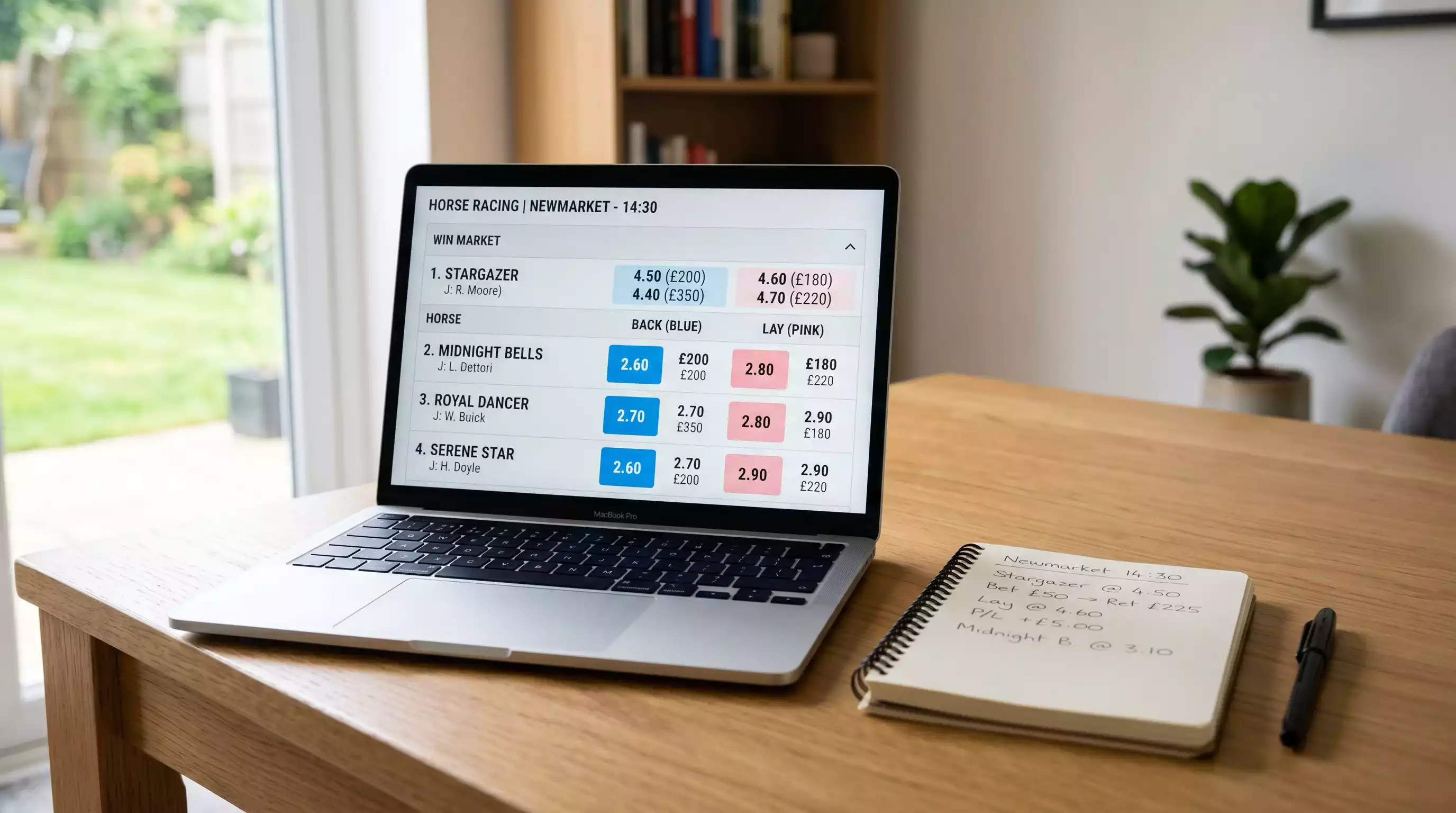
Exchange betting represents a distinct category worth understanding. Instead of betting against a bookmaker, you wager against other punters, with the platform taking a commission on winnings. This model often delivers better odds — sometimes significantly better — because there is no built-in margin. The learning curve steepens with concepts like laying horses and managing liability, but experienced punters frequently maintain exchange accounts alongside traditional bookmaker relationships.
The newer digital-first operators bring technological polish and aggressive marketing. Their apps tend toward clean interfaces and rapid loading times. Racing coverage varies — some have invested heavily in building racing departments while others treat the sport as an afterthought to football and tennis. I approach these platforms cautiously, checking whether their racing features match their slick presentations before committing funds.
| Feature Category | Heritage Operators | Exchanges | Digital-First |
|---|---|---|---|
| UK Racing Coverage | Comprehensive | All UK meetings | Variable |
| Irish Racing | Extensive | Good liquidity | Often limited |
| BOG Availability | Standard | Not applicable | Usually offered |
| Live Streaming | Most UK meetings | Limited | Varies widely |
| Form Resources | Detailed in-house | Basic | Often third-party |
| Each-Way Terms | Standard industry | Separate markets | Standard industry |
| App Reliability | Well-established | Generally strong | Usually excellent |
Irish racing deserves specific mention because it matters enormously to serious punters. The cross-channel form lines, the major festivals like Punchestown and Leopardstown, the Cheltenham trials — you need a bookmaker that takes Irish racing seriously. Coverage varies more than you might expect.
My approach involves maintaining accounts with multiple operators. When I fancy a selection, I check prices across four or five sites within seconds. The difference of a point or two might seem trivial in isolation but compounds over hundreds of bets into material amounts. The UKGC licence requirement underpins all legitimate UK-facing operators — beyond this baseline, look for evidence of investment in racing: dedicated pages, knowledgeable content, and racing-specific promotions beyond generic free bet offers.
What matters most depends on your betting style. High-volume punters should prioritise odds consistency and generous BOG terms. Occasional bettors might weight welcome offers and streaming quality more heavily. Big-race specialists should focus on extra places and enhanced odds for major events. No single operator excels at everything, which is precisely why understanding these distinctions helps you make smarter choices.
Best Odds Guaranteed: Why It Matters for Racing Bets
Last spring I backed a horse at 10/1 in a novice hurdle at Newbury. By the time the race started, the horse had drifted in the market to 16/1. My bookmaker paid me at 16/1 without me lifting a finger. That is Best Odds Guaranteed in action, and once you understand it, you will never consider a racing bookmaker that does not offer it.
Best Odds Guaranteed (BOG)
A promotion where the bookmaker guarantees to pay you at either the odds you took or the official Starting Price — whichever is higher. If the SP exceeds your early price, you receive the better payout automatically.
The remote casino, betting and bingo sector generated £7.8 billion in gross gaming yield last year — a 13.1% increase on the previous year. Competition for that revenue has made BOG standard among serious racing bookmakers, but the details vary considerably. Understanding these differences affects your bottom line over any extended betting period.
Timing matters first. Some bookmakers activate BOG from the moment overnight markets open. Others only apply it from a specific time on race day — often around 9am or when the course opens. If you like to study form the evening before and lock in prices, check whether your chosen platform offers overnight BOG protection.
BOG in Practice
You back a horse at 8/1 in the morning. By race time, market moves push the SP to 12/1.
Without BOG: You receive 8/1 returns
With BOG: You receive 12/1 returns
On a £20 stake: That is £80 versus £240 in profit
Caps and maximum payouts represent the crucial small print. Most bookmakers limit how much extra they will pay under BOG terms. These limits range from a few hundred pounds to five figures, with some operators being notably more generous than others. If you regularly bet at stakes where BOG payouts might approach these thresholds, comparing cap levels becomes essential research.
Each-way bets typically qualify for BOG, but check the specifics. The guarantee usually applies to both the win and place portions of your bet, effectively doubling the protection. Some platforms have separate limits for each-way BOG payouts — another detail buried in terms and conditions that rewards careful reading.
For a comprehensive breakdown of BOG policies across major bookmakers, including activation times and payout caps, I have written a detailed guide to Best Odds Guaranteed horse racing. The short version: treat BOG as a non-negotiable feature when choosing your racing bookmaker. Any operator who skips this offering is essentially asking you to accept worse value than necessary.
Understanding Each-Way Betting for Horse Racing
The first time I placed an each-way bet, I genuinely did not understand that I was placing two separate wagers. My horse finished second in a big-field handicap at York, and when the payout arrived, I was confused by the calculation. Eleven years later, each-way betting has become my most frequent approach for competitive races — and understanding its mechanics properly changes how you evaluate value.
Each-Way Bet — Two bets combined: one for the horse to win, one for the horse to place (finish in specified positions). Your total stake doubles because you are backing two outcomes.
Place terms define what “placing” means for different field sizes. In most races with eight or more runners, bookmakers pay on the first three finishers. Handicaps with sixteen or more runners typically extend to four places. The fraction tells you what portion of the win odds applies to the place element — usually 1/4 or 1/5 of the win price.
Each-Way Calculation
Horse: 10/1 each-way in a 12-runner race
Place terms: 1/4 odds, first three places
Stake: £10 each-way (total outlay: £20)
If your horse wins:
Win part: £10 x 10/1 = £100 profit + £10 stake returned = £110
Place part: £10 x 2.5/1 (quarter of 10/1) = £25 profit + £10 stake returned = £35
Total return: £145
If your horse finishes second or third:
Win part: loses (you forfeit the £10 win stake)
Place part: £10 x 2.5/1 = £25 profit + £10 stake returned = £35
Total return: £35 (net profit: £15 after accounting for the lost win stake)
This is why each-way betting suits certain race types better than others. Large-field handicaps — the cavalry charges at Ascot and Cheltenham — often contain horses at double-figure odds with realistic place chances. The place portion provides insurance on your selection while retaining full upside if the horse wins. Conversely, backing a 2/1 favourite each-way in a five-runner race makes little mathematical sense.
Extra places promotions have become major competitive battlegrounds among bookmakers. During big festivals, operators frequently pay out on additional places — sometimes paying four places instead of three, or seven places in a Grand National field. These enhanced terms can turn marginal value into genuine edges.
The complete guide to each-way betting explained covers advanced concepts including each-way doubles, extra place strategies, and situations where win-only bets actually offer superior value. For now, remember the fundamentals: each-way means two bets, check the place terms before wagering, and think carefully about whether the place portion represents genuine value for your selection.
Live Streaming Options at UK Racing Bookmakers
I learned the value of live streaming the hard way — backing a horse based on form that looked solid on paper, only to watch it parade in the paddock looking dull-coated and disinterested. Since then, I watch every race I bet on whenever possible. Modern bookmaker streaming has transformed what used to require a Racing TV subscription or a trip to the track.
The scale of racing viewership surprised even industry insiders last year. Royal Ascot attracted five million viewers across its five-day broadcast, with the final day pulling audiences more than 20% higher than the previous year. Cheltenham Festival hit a peak of 1.8 million viewers — the highest in four years. People want to watch races, not just bet on them.
ITV’s new four-year deal running from 2027 through 2030 ensures continued free-to-air coverage of major meetings on terrestrial television. But for the everyday punter following afternoon cards at Exeter or evening fixtures at Wolverhampton, bookmaker streaming provides the primary viewing route. Coverage varies dramatically between platforms.
| Streaming Feature | What to Look For | Why It Matters |
|---|---|---|
| UK Coverage | All daily meetings | Consistent access to every race you might bet on |
| Irish Racing | Major meetings included | Cross-channel form lines and festival prep |
| Access Requirements | Funded account vs placed bet | Flexibility to watch without wagering |
| Mobile Quality | Reliable on 4G/5G | Essential for trackside or commute viewing |
| Delay | Under 5 seconds | Relevant for any in-play betting |

Access requirements differ significantly between operators. Some platforms require only a funded account — money sitting in your balance unlocks streaming regardless of whether you bet that day. Others mandate placing a bet on the race you want to watch, typically requiring a minimum stake of a pound or two. The former approach suits punters who like studying races before committing; the latter pushes you toward wagering on every race you view.
Stream quality matters more than many punters realise. A reliable picture at your local course on a Saturday afternoon is one thing; maintaining that quality when thousands of punters pile onto the same feed for a Cheltenham Grade 1 is another. I have experienced streams freezing at crucial moments — never ideal, but catastrophic if you were considering an in-play wager.
The best racing bookmakers recognise that streaming serves multiple purposes: entertainment, form study, and informed betting. They invest accordingly in infrastructure and coverage breadth. For detailed comparisons of streaming availability across major platforms, the full guide to horse racing live streaming UK breaks down exactly what each operator offers and the hoops you need to jump through to access it.
Horse Racing Betting Apps: Mobile Experience Compared
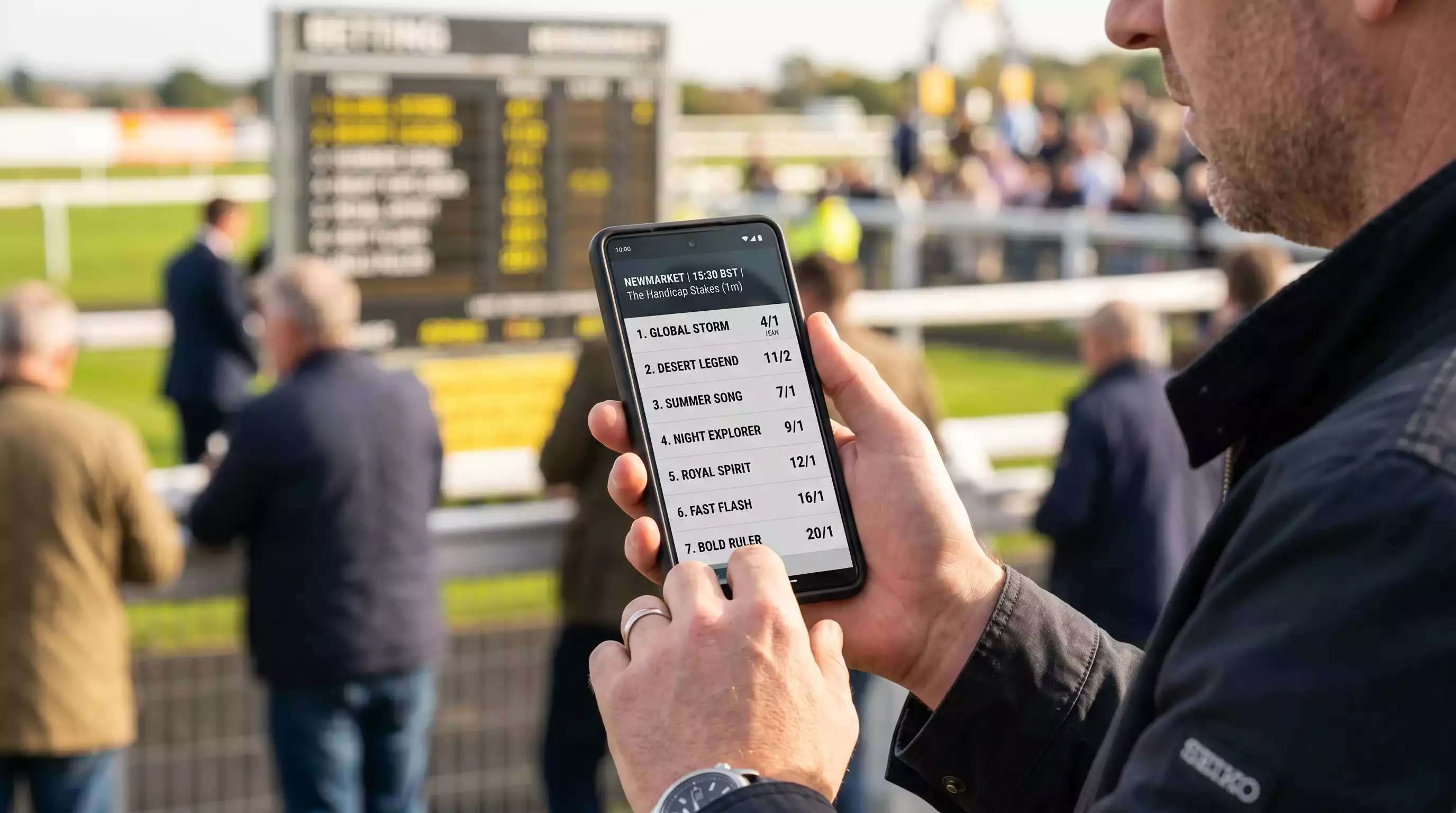
Standing in the parade ring at Newmarket last autumn, I watched a favourite back from 6/4 to 5/4 in the final minutes before a race. By the time I navigated through a poorly designed app to find the right market, the price had gone entirely. That frustration — amplified by the horse winning by three lengths — crystallised why mobile app quality matters for racing bettors.
The numbers reflect a mobile-first reality: 68% of UK bettors expect to increase their activity during the 2026 sporting calendar. Most of that betting happens on phones, whether at home on the sofa, at the racecourse between races, or during a lunch break. An app that adds friction to the betting process costs you opportunities.
Speed to Bet
Best apps get you from opening to placed bet in under 20 seconds. Test this yourself before depositing significant funds.
Racing Navigation
Dedicated racing section within one tap. Racecards showing runners, form, BOG terms, and streaming access.
Quick Bet Features
One-tap each-way toggle, stake presets you can customise, bet confirmation without excessive steps.
Streaming Integration
Watch races without leaving the betting interface. Picture-in-picture while browsing other markets.
Racing-specific features separate genuinely useful apps from generic betting platforms with racing bolted on. Look for quick access to today’s cards, clear display of place terms before you add a selection, BOG badges on qualifying markets, and non-runner notifications that update your open bets.
Cash out functionality has become standard but implementation varies. For racing, where markets move quickly, responsive cash out matters. Test this with small stakes before relying on it for meaningful amounts.
For detailed breakdowns of individual platforms including iOS and Android differences, head to the complete horse racing betting apps UK comparison. The key principle: your app should make betting easier, not harder.
Horse Racing Welcome Bonuses and Free Bets
My first racing welcome bonus seemed incredible on paper — “Bet £10 Get £50 in Free Bets!” The reality involved wagering requirements, minimum odds, excluded bet types, and expiry windows that made extracting actual value considerably harder than the headline suggested. A decade later, I have learned to read the small print first and the promotional splash second.
Welcome offers for racing bettors typically fall into a few categories. Free bet tokens awarded after your qualifying wager represent the most common structure — stake a certain amount, receive betting credits once that wager settles. Deposit matches double or partially match your first deposit up to a specified ceiling. Enhanced odds offers boost the price on selected horses for new customers, though these usually come with stake limits.
Warning: Wagering Requirements
Free bets rarely convert to withdrawable cash at face value. Most require you to wager the bonus amount (and sometimes any winnings) a certain number of times before withdrawal. A 3x wagering requirement on a £40 free bet means placing £120 in bets before accessing any proceeds. Factor this into any assessment of offer value.
Racing-specific welcome offers tend to provide better value than generic sports betting promotions for dedicated punters. Look for terms that explicitly include each-way bets, allow reasonable minimum odds, and give you enough time to use free bet tokens sensibly.
The mechanics of claiming deserve attention. Some offers require opting in before depositing. Others exclude certain payment methods from qualifying deposits. The qualifying bet sometimes needs to be a single rather than a multiple. These details catch out inattentive customers regularly.
Beyond the initial welcome, ongoing promotions often provide more sustainable value. Extra places on big races, money back specials if your horse finishes second to the favourite, price boosts on selected races — these accumulate into meaningful benefits over time.
The detailed breakdown of horse racing welcome offers covers current promotions and how to evaluate their genuine worth. The overarching principle: treat bonuses as nice-to-have additions rather than primary reasons for choosing a bookmaker.
Is Online Horse Racing Betting Safe in the UK?
A friend of mine lost several hundred pounds to an unlicensed betting site last year. The platform looked professional, offered seemingly competitive odds, and processed his deposits instantly. When he tried to withdraw his winnings, the site went dark. No customer service, no regulatory recourse, no way to recover his money. His story is becoming disturbingly common.
Traffic to unlicensed betting sites focused on horse racing has surged by 522% between August 2021 and September 2024. That staggering increase reflects a dangerous trend: punters, often seeking to avoid new regulatory requirements on licensed platforms, wandering into unregulated waters where zero protections exist.
UKGC Licensing is Non-Negotiable
Any betting site legally serving UK customers must hold a licence from the UK Gambling Commission. This is not optional, not flexible, and not subject to workarounds. Operating without this licence is a criminal offence. Betting with unlicensed operators exposes you to fraud, data theft, and zero recourse for disputes.
Grainne Hurst, CEO of the Betting and Gaming Council, put it bluntly when discussing unlicensed operators: “These parasite operators don’t pay tax, don’t care about safer gambling, and do not contribute a penny to the Levy.” Beyond the direct financial risk to individuals, using these platforms starves British racing of the funding that supports prize money, racecourse maintenance, and industry employment.
522%
The increase in traffic to unlicensed horse racing betting sites since August 2021 — a genuine threat to both punters and racing industry funding

Verification requirements on licensed sites sometimes frustrate punters, but they exist for important reasons. Identity checks prevent fraud and underage gambling. These processes feel bureaucratic until you consider the alternative: unregulated sites that demand no verification because they face no oversight.
How do you verify a site’s legitimacy? Every UKGC-licensed operator must display their licence number prominently — usually in the website footer. You can verify this number directly on the Gambling Commission’s public register. Red flags include offshore-only contact details, cryptocurrency-only deposits, and welcome offers that seem too generous to be sustainable.
The bottom line: stick to UKGC-licensed operators, verify that licence before depositing, and treat any platform that cannot prove its regulatory status as off-limits.
How Affordability Checks Affect Your Betting
When a racing contact told me his account had been restricted mid-Cheltenham because he triggered an affordability threshold, I initially dismissed it as an outlier situation. Then the same thing happened to another acquaintance, then another. Affordability checks have become one of the most consequential — and least discussed — changes affecting UK horse racing bettors.
The numbers tell a striking story: online betting turnover on British horse racing fell by £1.6 billion over two years. Adjusting for inflation, that figure approaches £3 billion in real-term decline. Multiple factors contribute, but enhanced affordability requirements bear significant responsibility. When regular punters face friction, some reduce activity; others, troublingly, migrate to unlicensed alternatives.
The £150 Monthly Threshold
Since February 2025, the Gambling Commission requires licensed operators to conduct enhanced checks on customers who lose more than £150 per month. These checks may involve requests for bank statements, payslips, or other evidence of financial capacity. The process can result in stake limits, account restrictions, or suspended access.
Nevin Truesdale, former Chief Executive of the Jockey Club, voiced industry frustration: “The Gambling Commission seems to want to reduce gambling to just small-stakes gamblers and that can’t be right.” Whether you agree with that perspective or not, the practical impact on racing betting is undeniable. Higher-stakes punters increasingly find themselves subject to intrusive verification processes that can pause their betting at inconvenient moments.
The checks themselves vary between operators. Some platforms implement light-touch processes that resolve quickly with minimal documentation. Others pursue aggressive evidence requirements that some customers find unacceptable. There is no standardised approach across the industry, meaning your experience depends heavily on which bookmaker you use.
For casual punters betting modest amounts, affordability checks rarely cause disruption. The impact concentrates on those who bet more seriously — exactly the demographic most valuable to bookmakers and most engaged with racing. Practical implications for choosing a bookmaker include understanding how different operators implement these requirements. Some sites publish clear guidance; others spring checks on customers without warning.
When to Bet: Racing Calendar and Seasonal Peaks
The difference between betting on racing in October versus betting on racing in March can be night and day — not just in terms of race quality, but in the promotional landscape, odds availability, and overall market liquidity. Understanding seasonal rhythms has made me a more strategic punter over the years.
Gambling Commission data reveals a clear pattern: participation in horse racing betting hit 7% of the population in the quarter covering Cheltenham and the Grand National, dropping to 4% in the summer months that follow. That swing reflects how major festivals concentrate casual interest alongside year-round enthusiasts, creating market dynamics that differ substantially from quieter periods.
Royal Ascot attendance rose 4.8% last year while the Grand National Festival saw a 4.1% increase — continuing a recovery that pushed total racecourse visitors past five million for the first time since 2019. These numbers reflect genuine renewed enthusiasm for on-course racing.
Cheltenham in March dominates the National Hunt calendar. The four-day Festival represents the most bet-upon meeting of the year, with bookmakers competing aggressively for custom through enhanced odds, extra places, and money back specials.
The Grand National at Aintree follows in April, attracting the largest casual betting audience of any race. Bookmakers respond with enhanced each-way terms that accommodate the enormous field — extra places often extend to pay eight or more positions.
Royal Ascot in June marks the pinnacle of the Flat season for both sporting prestige and betting interest. Five days of elite racing attract television audiences numbering millions and correspondingly intense bookmaker competition.
The key insight: align your betting intensity with calendar periods when conditions favour punters. Major festivals bring enhanced terms worth exploiting. Saturday ITV coverage meetings attract competitive pricing. Quieter periods still offer opportunities but require different approaches.
UK Horse Racing Industry: Market Overview 2026
Before you commit to any betting platform, understanding the health of the sport you are betting on matters. A thriving racing industry means better prize money, more competitive fields, improved facilities, and ultimately more rewarding betting opportunities. The good news: British racing stands in stronger shape than pessimistic headlines sometimes suggest.
The UK horse and sports betting market reached £3.7 billion in 2026, reflecting a substantial economic ecosystem around racing. That figure represents millions of transactions, thousands of jobs, and a commercial infrastructure that sustains the sport at levels from village point-to-points to Ascot Gold Cup day.
£4 billion
The annual economic contribution of horse racing to the British economy — supporting over 85,000 direct jobs across training yards, racecourses, and associated industries
The Levy system — through which bookmakers fund the sport — achieved record yields last year. The Horserace Betting Levy Board collected £108.9 million for the 2024/25 financial year, surpassing the previous year’s £105.3 million. Grainne Hurst of the Betting and Gaming Council highlighted the trend: “For the fourth year running Levy contributions have increased to record levels, demonstrating the growing, long-term investment regulated betting provides British horseracing.”
Prize money follows this upward trajectory. Total purses rose 3.5% to £194.7 million in 2025, with additional increases planned. Better prize money attracts better horses, which creates more compelling betting propositions.
Racecourse attendance hit 5.031 million in 2025 — the first time the figure has exceeded five million since before the pandemic, representing a 4.8% increase on the previous year.
Challenges exist, naturally. Affordability checks have contributed to declining turnover on some race types. Concerns about unlicensed competition merit serious attention. But the fundamental commercial underpinnings of British racing — Levy revenue, attendance figures, prize money growth — point to an industry with genuine resilience. A healthy industry attracts continued bookmaker investment, maintaining the streaming coverage and racing-specific features that benefit punters.
How to Pick the Right Bookmaker for Your Racing Bets
After everything I have covered, you might feel overwhelmed by criteria. Odds quality, BOG terms, streaming, apps, promotions, safety — how do you weigh all these factors against each other? In practice, I recommend starting from your betting profile and working outward.
What kind of racing bettor are you? Someone who backs a few horses at the weekend has different needs from someone studying form daily and wagering across multiple meetings. The occasional punter should prioritise user experience and welcome offers; the regular bettor should obsess over odds consistency and BOG terms where small edges compound into meaningful sums.
Do
- Maintain accounts with multiple bookmakers to compare prices
- Test withdrawal processes with small amounts before committing larger funds
- Check BOG terms specifically — activation times and payout caps
- Verify UKGC licence status before depositing
- Read each-way place terms before placing bets
Avoid
- Choosing solely based on welcome offer generosity
- Ignoring streaming quality if you watch races
- Assuming all bookmakers treat racing equally seriously
- Depositing significant funds without testing the platform first
- Using unlicensed sites regardless of how attractive they appear

Your preferred bet types should influence platform choice. Each-way specialists need bookmakers with competitive place terms and regular extra places promotions. Exchange users prioritise liquidity and commission rates. Match your betting style to operator strengths.
Before Opening Any New Account
- Confirm UKGC licence on the Gambling Commission register
- Read BOG terms including caps and activation times
- Check streaming coverage for your preferred meetings
- Review welcome offer conditions including wagering requirements
- Test app performance on your device
Start small with any new platform. Deposit modest amounts, place some bets, attempt a withdrawal. This testing phase reveals more about how an operator actually functions than any amount of promotional material. Only after satisfying yourself that the basics work smoothly should you consider moving more significant funds.
Finally, recognise that your ideal bookmaker might change over time. Operators evolve — some improve their racing offerings while others let them stagnate. Loyalty to a bookmaker that no longer meets your needs costs you value.
Making Your Choice: Final Recommendations
Finding the best horse racing betting sites UK has to offer comes down to matching your priorities with operator strengths. No single platform excels at everything, which is precisely why thoughtful selection — and maintaining multiple accounts — gives you genuine advantages.
The fundamentals remain constant: UKGC licensing is non-negotiable, Best Odds Guaranteed should be standard, and the platform must actually work well for placing racing bets rather than treating the sport as an afterthought. Beyond these basics, your ideal bookmaker depends on whether you prioritise streaming access, mobile experience, promotional generosity, or raw odds quality.
Start with verification — check licences, test withdrawals, confirm BOG terms. Then expand gradually, building familiarity with multiple platforms so you always have options when seeking the best price or the right promotion. The racing calendar rewards those who prepare properly, and choosing the right betting partners forms part of that preparation.
I have spent eleven years learning these markets, making mistakes, and refining my approach. The single most valuable lesson: treat bookmaker selection as seriously as selection itself. A good pick at a weak price delivers less value than the same pick at the right price with the right bookmaker. Apply the same analytical rigour to choosing where you bet as you do to choosing what you bet on, and you will find yourself better positioned for success across the racing season.
Horse Racing Betting: Common Questions Answered
What is Best Odds Guaranteed and how does it work?
Best Odds Guaranteed is a promotion where bookmakers pay you at whichever price is higher — the odds you took when placing your bet or the official Starting Price when the race begins. If you back a horse at 8/1 in the morning and it drifts to 12/1 by race time, you receive the 12/1 payout. This protection applies automatically at most major UK racing bookmakers, though terms vary regarding activation times, maximum payouts, and qualifying bet types. BOG removes the dilemma of whether to take an early price or wait for potential drift, making it one of the most valuable features for regular racing bettors.
How do each-way bets work in UK horse racing?
An each-way bet is actually two separate bets combined: one for your horse to win and one for it to place (finish in specified positions). Your stake doubles because you are backing two outcomes. If the horse wins, both bets pay out — the win portion at full odds and the place portion at a fraction (typically 1/4 or 1/5) of those odds. If the horse places but does not win, you lose the win stake but collect on the place portion. Place terms depend on field size and race type — usually first three in races with eight or more runners, extending to first four in larger handicaps.
Which UK bookmakers offer free live streaming of horse racing?
Most major UKGC-licensed bookmakers offer live streaming of UK and Irish horse racing, though access requirements differ. Some platforms require only a funded account — money sitting in your balance unlocks streaming regardless of whether you bet. Others mandate placing a bet on the specific race you want to watch, typically requiring a minimum stake of one or two pounds. Coverage breadth also varies: heritage racing operators tend to stream more meetings comprehensively, while newer digital-first platforms may offer more limited race coverage. Always verify streaming availability for your preferred meetings before choosing a platform primarily for this feature.
What is the difference between early price and Starting Price?
Early price refers to odds available before race day or in morning markets before betting activity intensifies. Starting Price is the official odds determined at the moment the race begins, calculated from on-course bookmaker boards. Early prices offer the chance to lock in value if you believe a horse will shorten, but carry risk if the horse drifts to a bigger price. Best Odds Guaranteed policies bridge this gap by ensuring you receive whichever price is better. The Starting Price remains the benchmark used for settling bets when no fixed odds were taken, and serves as the official record for historical results.
How do I choose the best horse racing betting site in the UK?
Start by confirming UKGC licensing, then evaluate based on your betting style. Key criteria include odds consistency across multiple meetings rather than occasional headline prices, BOG terms including activation times and payout caps, streaming coverage for meetings you follow, mobile app quality if you bet on the go, withdrawal speed and methods, and racing-specific features like integrated form guides. Consider maintaining accounts with several bookmakers to compare prices and access different promotions. Test platforms with small deposits before committing significant funds, and verify withdrawal processes work smoothly before relying on any operator as your primary choice.
What makes a UK betting site legally licensed and trustworthy?
Legal operation requires a licence from the UK Gambling Commission — this is mandatory for any site serving UK customers, with no exceptions. Verify licence status by checking the operator’s displayed licence number against the UKGC public register. Trustworthy operators display responsible gambling tools prominently, provide UK-based customer service, offer regulated payment methods, and publish clear terms and conditions. Red flags include offshore-only contact details, cryptocurrency-only deposits, missing or unverifiable licence information, and promotions that seem unsustainably generous. With unlicensed site traffic up 522% in recent years, vigilance about operator legitimacy has become essential.
What are the place terms for each-way betting?
Standard place terms depend on field size and race type. Races with five to seven runners typically pay first and second at 1/4 odds. Races with eight or more runners usually pay first three at 1/4 or 1/5 odds. Handicaps with sixteen or more runners often pay first four at 1/4 or 1/5 odds. During major festivals, bookmakers frequently offer enhanced terms — paying extra places beyond standard requirements — which can significantly improve each-way value in competitive fields. Always check the specific terms displayed on your betting slip before confirming, as bookmakers occasionally vary from standard industry terms.
Created by the ”bet for Horse Racing” editorial team.